

Cooling Rolls for Plastic Sheet Extrusion Processes
Plastic sheet production has extensive cooling requirements. As the extruded sheet comes out of the heated chamber and die, the plastic - being a poor heat conductor - retains Most of its heat. To achieve proper cooling for plastic sheet, double shell heat transfer rolls are used to draw heat away from the hot plastic sheet. By running the hot plastic sheet in an "S" pattern through three to five chill rolls (either horizontally or vertically) The plastic sheet can be brought down to an acceptable temperature. The quality of the chill rolls will dictate the sheet thickness, texture, and gloss of the plastic sheet surface.
Custom Plastic Cooling Roll Finishes
Plastic extrusion cooling rolls need to efficiently and quickly transfer heat. They should be fabricated with a hardened base metal to withstand "worm tracking" and other potential deformation consequences of the process.
Roll Technology supplies heat transfer rolls of various sizes with totally custom surface finishes to meet each customer's individual need. Completely defect free flawless optical mirror finishes measured to 0~1 Ra are common in the industry, as are textured surfaces (matte and satin) produce to varying degrees of roughness on the product.
Plastic Cooling Roll Solutions
We address many issues with respect to engineering the correct roll for its application including deflection, fluid flow, expansion and contraction of the heat transfer roll, final geometry as well as other parameters which make up proper design and finish. Roll Technology works with your engineering and maintenance staffs to offer the following:
- A full range of roll diameters and face lengths.
- Mono-flow or dual-flow heat transfer designs.
- Precision finishing to your exacting specifications.
- Bearing selection and installation for close tolerance run~out requirements.
- Convex, concave or extremely "flat" finishing specifications.
Common surface finishes that are available:
- RTC’s Optical Mirror surface
- Fine, medium or coarse dull, gray matte surfaces.
- Fine, medium or coarse pre-blasted satin surfaces.
- Commercial polished surfaces from 4-16 Ra.
Companies worldwide depend on Roll Technology's expertise and experience in solving problems inherent in the web processing industry. 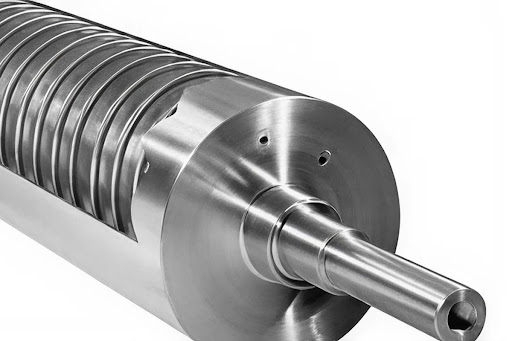
Why Plastic Cooling Rolls Make or Break Sheet Quality
When a cooling roll runs out of tolerance, the symptoms show up fast on the production floor: inconsistent sheet gauge, surface haze, gloss variation across the web, and rejected lots that eat into margin. Because plastic holds heat so stubbornly, the chill roll stack is the single component that determines whether the extruded sheet leaves the line within spec. Plastic cooling rolls must deliver uniform surface temperature, dimensionally stable geometry, and a finish that transfers exactly to the polymer, run after run.
That is the problem Roll Technology solves. With more than 40 years of experience in the fabrication of and finishing of heat transfer rolls for the web processing industry, we build plastic cooling rolls engineered to hold temperature uniformity and surface integrity across long production campaigns, so process engineers spend less time chasing defects and more time running product.
Engineering Specifications That Match Your Line
Technical buyers do not source rolls based on marketing language; they source based on numbers. Every plastic cooling roll we fabricate is built to the diameter, face length, flow design, and run-out tolerance your application demands. Our capabilities include:
- Roll diameters and face lengths sized to your existing frame and drive geometry
- Mono-flow and dual-flow double shell heat transfer designs for even surface temperature
- Hardened base metals selected to resist worm tracking and thermal deformation
- Bearing selection and installation for close-tolerance run-out requirements
- Convex, concave, and precision "flat" finishing to compensate for deflection under load
We work directly with your engineering and maintenance staff on deflection, fluid flow, thermal expansion, and final geometry, so the finished roll integrates cleanly into your line rather than forcing a workaround.
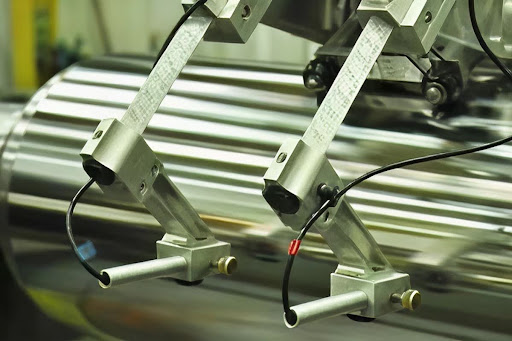
Surface Finishes for Cast Film and Sheet Extrusion
Surface finish is where sheet texture, thickness control, and gloss are won. As a cooling roll manufacturer with full in-house finishing, Roll Technology produces the exact surface your polymer and end product require, including:
- RTC Optical Mirror surfaces, with defect-free finishes measured to 0–1 Ra for high-gloss sheet and film
- Fine, medium, and coarse dull gray matte finishes for low-glare and writable surfaces
- Fine, medium, and coarse pre-blasted satin finishes for controlled texture transfer
- Commercial polished surfaces from 4–16 Ra for general sheet applications
Because finishing happens under our roof, we control quality from base metal through final polish, and we can refinish or re-chrome your existing rolls when wear begins to show up in your sheet quality.
FAQs
What is the difference between chill rolls and plastic cooling rolls?
The terms are often used interchangeably on the production floor. "Chill rolls" typically refers to the individual rolls in a cooling stack that the extruded sheet wraps in an S-pattern, while "cooling rolls" or "plastic cooling rolls" describes the same double shell heat transfer rolls by their function. Both draw heat away from the hot polymer to set sheet gauge, texture, and gloss. What matters more than the name is the roll's surface temperature uniformity and finish, which is what determines final sheet quality.
Can you re-chrome or refinish our existing cooling rolls instead of building new ones?
Yes. When sheet defects start tracing back to roll wear, scoring, or a degraded surface, refinishing an existing roll is often faster and more economical than fabricating a replacement. We strip, re-chrome, and re-finish worn rolls back to your original specification, including optical mirror, matte, and satin surfaces. Send us the roll dimensions and current condition and we can advise whether refinishing or replacement is the better path.
How long does a custom plastic cooling roll take to fabricate?
Lead time depends on roll size, material availability, flow design, and finish complexity. Because every roll is built to your specifications rather than pulled from stock, the best way to get an accurate timeline is to send your drawing or fill out a specification form. We'll scope the build and give you a realistic delivery date up front so you can plan around your line schedule.
What roll surface finish do I need for high-gloss versus matte sheet?
It comes down to the surface you want transferred to the polymer. High-gloss and optically clear sheet or film require a defect-free mirror finish measured to 0–1 Ra. Low-glare, writable, or textured products call for a dull gray matte or pre-blasted satin finish, available in fine, medium, and coarse grades. If you're unsure which finish matches your end product, our engineers can recommend a specification based on your polymer and application.
A Cooling Roll Partner for the Long Run
Plastic extrusion and cast film operations need a supplier who understands the process, not just a parts vendor. Companies worldwide rely on Roll Technology's experience solving the heat transfer, geometry, and finish problems that are inherent to plastic sheet production. Whether you need new plastic cooling rolls for a line expansion, replacements for worn assemblies, or a custom finish to fix a recurring sheet defect, our team can spec and build it.
Ready to bring a defect back into spec or equip a new line? Request a quote with your roll dimensions and finish requirements, or call us at 864.269.7703 to talk through your application with an engineer.
CONTACT US TODAY
Click HERE to request a quote or call us at 864.269.7703
Don't have a drawing of your roll?
Please fill out this SPECIFICATION FORM instead